
2026 Health & Safety Checklist for UK Small Businesses: Simple Steps to Meet HSE Requirements
Your essential guide to staying compliant, reducing risk, and protecting your workforce
Health and safety legislation continues to evolve, and 2026 brings renewed expectations for UK employers to demonstrate strong compliance, effective risk management, and a proactive approach to workplace safety. Whether you run a small business or manage a large organisation, having a clear, up‑to‑date health and safety checklist is essential for meeting your legal duties and creating a safe working environment.
This comprehensive Health & Safety Checklist for UK Businesses in 2026 will help you review your current arrangements, identify gaps, and plan improvements for the year ahead.
1. Review Your Health & Safety Policy
Every UK business with five or more employees must have a written health and safety policy. In 2026, this should include:
• A clear Statement of Intent
• Defined roles and responsibilities
• Detailed arrangements for managing risks
• Evidence of regular review (at least annually)
If your policy hasn’t been updated in the last 12 months—or your operations have changed—it’s time for a refresh.

2. Ensure Risk Assessments Are Current
Risk assessments remain the backbone of workplace safety. Employers must:
• Identify hazards
• Evaluate risks
• Implement control measures
• Record findings
• Review assessments regularly
In 2026, HSE continues to emphasise proportionate, practical risk assessments rather than excessive paperwork. If your assessments are outdated or generic, they may not meet legal standards.

3. Update Your RAMS (Risk Assessments & Method Statements)
For higher‑risk industries such as construction, manufacturing, warehousing, and maintenance, RAMS are essential.
Check that your RAMS:
• Reflect current working practices
• Include task‑specific hazards
• Are communicated clearly to staff and contractors
• Are reviewed after incidents or changes in process

4. Check Staff Training & Competency
Training must be relevant, up to date, and recorded. In 2026, employers should ensure:
• Induction training is completed for all new starters
• Role‑specific training (e.g., manual handling, working at height, COSHH) is current
• Supervisors and managers understand their responsibilities
• Refresher training is scheduled and documented
Competency is not just training—it’s training + experience + supervision.

5. Review Fire Safety Arrangements
Under the Regulatory Reform (Fire Safety) Order, employers must:
• Complete a fire risk assessment
• Maintain fire alarms, extinguishers, and emergency lighting
• Provide clear evacuation routes
• Train fire marshals
• Conduct regular fire drills
If your building layout or occupancy has changed, your fire risk assessment must be updated.
6. Inspect Workplace Equipment & Premises
Regular inspections help prevent accidents and demonstrate compliance.
Check:
• Machinery and tools
• Electrical systems (PAT and fixed wiring)
• Lifting equipment (LOLER)
• Pressure systems (PSSR)
• Ventilation and welfare facilities
• Housekeeping and walkways
Record all inspections and maintenance activities.

7. Review Your Accident & Incident Reporting System
Your business must have a clear process for:
• Reporting accidents
• Recording near misses
• Investigating incidents
• Taking corrective action
• Meeting RIDDOR reporting requirements
Near‑miss reporting is especially valuable for preventing future harm.

8. Check Your First Aid Provision
Under the Health and Safety (First-Aid) Regulations, you must:
• Conduct a first‑aid needs assessment
• Provide trained first aiders or appointed persons
• Maintain stocked first‑aid kits
• Display first‑aid information clearly
If your workforce size or risk profile has changed, reassess your provision.

9. Review Contractor Management Procedures
If you use contractors, you must ensure they are competent and safe.
Check that you:
• Vet contractors before work begins
• Provide site‑specific inductions
• Share relevant risk assessments
• Monitor contractor activities
• Review performance after work is completed
Poor contractor management is a common cause of incidents.

10. Strengthen Your Safety Culture
A positive safety culture improves compliance, morale, and productivity.
In 2026, focus on:
• Encouraging open communication
• Recognising safe behaviour
• Involving staff in decision‑making
• Providing clear leadership
• Addressing concerns promptly
A strong culture reduces accidents and boosts engagement.

Need Help Staying Compliant in 2026?
If you want expert support with your health and safety responsibilities, our consultancy provides:
• Health & Safety Policies
• Risk Assessments & RAMS
• Competent Person Services
• Site Inspections & Audits
• Training & Compliance Support
• Retained Advisor Packages
We help businesses stay safe, compliant, and confident all year round.
Downloads/FREE Trials/Contact US Centre
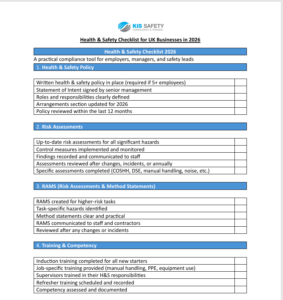
Download your health and safety checklist by clicking the orange button
Take advantage of a FREE trail for approved online Health and Safety Training
Get in touch for more information on how we can help you.